Mental Health
4 min read
December 10, 2022
Depression: disease or symptom?

Depression: disease or symptom?

Depression is often framed purely as a disease driven by neurotransmitter imbalance, yet growing evidence suggests this view is incomplete. Neurochemical changes may be downstream effects—signals or adaptive responses to deeper biological, psychological, and environmental stressors rather than the sole root cause.

The paradigm of depression being a disease/disorder has evolved around the concept that neurotransmitters are primarily the root cause.

Yet, dysregulation in this field could very well be a symptom, coping mechanism and signal from a multitude of different issues ranging from inside, as well as outside of the body (as explained in my previous post).

The association of depression solely being linked to low levels of norepinephrine and serotonin is flawed throughout studies. There are many other variables that can result in this outcome.

Several studies indicate that as few as 25% of depressed patients have low levels of neurotransmitters, while paradoxically, some patients have abnormally high levels of neurotransmitters with no history of them ever being low.

Does the placement of depression into the category of disease/disorder attach a greater overwhelming thought process to the word than if we were to label it as a symptom?

One could argue that generally speaking, symptoms are alleviated with greater ease when compared with the disease.

It is easy to allow our identity to be taken hostage by adopting the ownership of depression and succumb to its depths.

Yet when we shift our thinking to understand that depression does not embody us as individuals, nor does it yield an element involved in modeling our identity, we shift our thoughts to a greater sense of self-empowerment.

We can overcome the ‘depression vs self’ mentality by accepting that depression is an adaptive and protective mechanism from the human body, accompanied with respect for the opportunity it brings forth to gain further insight into what needs nurturing.

I understand this is a challenging and delicate shift to take, yet the perception of the experience is paramount to one’s thoughts.

Could we disempower the shackling chains of emotional paralysis, gain buoyancy in the swamp of thoughts and restore vitality into one’s behaviour when depression is approached in the light of a symptom?

Can we utilise it as foresight with direction to what may require attention and care within our body and how we live?

This paradigm shift allows more of a harmonious level of awareness with the experience of depression and what possibilities it may bring.

References:

  1. Asberg M, et al. Arch Gen Psychiatry. 1976
  2. Mol Psychiatry. 2010 March
  3. Della FP, et al. Pharmacol Biochem Behav. 2012
  4. Della FP, et al. Behav Brain Res. 2012
  5. Della FP, et al. Metab Brain Dis. 2013

Next news

PMS is characterised by a collection of physical and emotional symptoms that occur in the day before menstruation.

(Awanish Kumar Pandey, et al. 2013) indicated that 100% of girls tested showed a prevalence of at least one symptom of PMS, with 42.5% showing more than five symptoms.

Some of the most common psychological symptoms ranged from:

  • Lethargy (83%)
  • Anger and hypersomnia (74%)
  • Anxiety (68.5%)
  • Feeling overwhelmed (62.5%)
  • Hopelessness (50%)
  • Difficulty in concentrating (33.5%)
  • Tearfulness (26.5%)
  • Insomnia (26%)

Some of the most common physical symptoms ranged from:

  • Joint or muscle pain (77.5%)
  • Headaches (67%)
  • Weight gain (58%)
  • Backache (57.5%)
  • Bloating (41%)
  • Breast tenderness (31%)
  • Acne (*16.5%)

*16.5% may seem low when compared with some of the other figures mentioned above, however, this still equates to 1/6 women suffering from acne every single month around their menstruation.

The conventional approach for addressing PMS uses SSRI’s, which numbs the individual along with increasing the likelihood of suicide ideation, risks post-SSRI-sexual-dysfunction and depletes melatonin.

This complex condition likely has multiple causes, with fluctuations in hormone levels and nutritional deficiencies playing key roles.

OESTROGEN

One of the possible reasons for PMS has been associated with the excess of oestrogen relative to progesterone.

High oestrogen has also been found to increase thyroid-binding-globulin, which will reduce the activity of the thyroid hormones, further leading to apathy and a lack of energy. Ensuring oestrogen’s efficient metabolism through the correct pathways and supporting elimination from the body is paramount.

In short, this requires a range of nutrients from cruciferous vegetables, flaxseed and possibly grapefruit (grapefruit does have the ability to inhibit CYP3A4 enzyme which will decrease the metabolism of medication. Therefore grapefruit should be avoided to prevent medical complications).

PROGESTERONE

Progesterone is also at its lowest during the time of PMS. Progesterone acts on GABA receptors in the brain to produce a calming effect along with supporting thyroid conversion, thus assisting with energy.

The consumption of Wild Yams supports progesterone.

MAGNESIUM

Magnesium deficiencies may be causing or aggravating symptoms of PMS. Magnesium is essential for nerve, muscle function and the ability for the muscles to relax, all of which can be affected in PMS. (Iran J Nurs Midwifery Res. 2010 Dec).

A decrease of 12.42% in serum magnesium levels have been found in the follicular phase when compared to the menstruation with magnesium levels elevating a further 7% in the luteal phase. These fluctuations portray the role of magnesium in accordance with menstruation. Magnesium can be obtained through the consumption of dark chocolate or almonds.

IRON

In a meta-analysis, eating an iron-rich diet was linked to a 31% lower risk of developing premenstrual syndrome (Am J Epidemiol. 2013 May). Iron will be depleted during menses, thus further depleting levels. Iron is essential for energy regulation, along with being an essential a cofactor for the enzyme tryptophan hydroxylase, which catalyses the conversion of tryptophan into 5-hydroxytryptophan, a precursor for serotonin (the neurotransmitter associated with mood and happiness).

Iron obtained from plants is likely to have reduced bioavailability within the body. It is often accompanied by phytic acid and oxolates, both of which bind with the iron to prevent absorption.

Another factor to take into account when seeking to optimise iron levels within the body is stomach acid (HCl). HCl is essential to break iron down from food for assimilation within the body.

One can complete the baking soda challenge test for indication of whether their HCl is low or not, by drinking 250ml of water mixed with 1/4tsp of baking soda first thing in the morning. If the individual belches after the 3-minute mark, this would correlate to low HCl and therefore a likelihood that the individual will have poor digestion and assimilation of iron within their body.

ZINC

Women have a 24%–29% lower risk of PMS when in the top 2 quintiles of zinc to copper ratios (Am J Clin Nutr. 1995). Zinc deficiency is associated with depression while copper up-regulates the CYP19A1 enzyme, which leads to aromatisation of androgens to oestrogen (estradiol) while enhancing estradiol binding affinity to the oestrogen receptors, which amplifies its action.

Below are my preferred dietary sources of zinc per 100g:

  • Oysters – 61mg
  • Beef – 11mg
  • Hemp Seeds – 10mg

Zinc is another micronutrient which requires HCl for its assimilation, therefore assessing HCl status could also correlate with the potential zinc status within the individual.

VITAMIN B6

The effectiveness of Vitamin B6 in the treatment of PMS dates back over 40 years. Results were noted such as ‘significant decreases in all symptoms’ (Goei and Abraham, 1983), ’70% reporting good or partial response’ (Brush, 1988) and an ‘improvement in 63% of patients on pyridoxine’ (Day, 1979). The dose used within these studies ranged from 40-200mg (with possible risk of toxicity at 200mg).

Only one patient of the 940 participating in these trials indicated the presence of any side effects that could be attributed to the neuropathy associated with pyridoxine toxicity (London RS, et al. 1991).

Obtaining this level of Vitamin B6 effectively through food will be extremely difficult as these dosages are 29-115 times that of the recommended daily allowance.

Below are my preferred dietary sources of Vitamin B6 per 100g:

  • Organic liver – 0.6mg
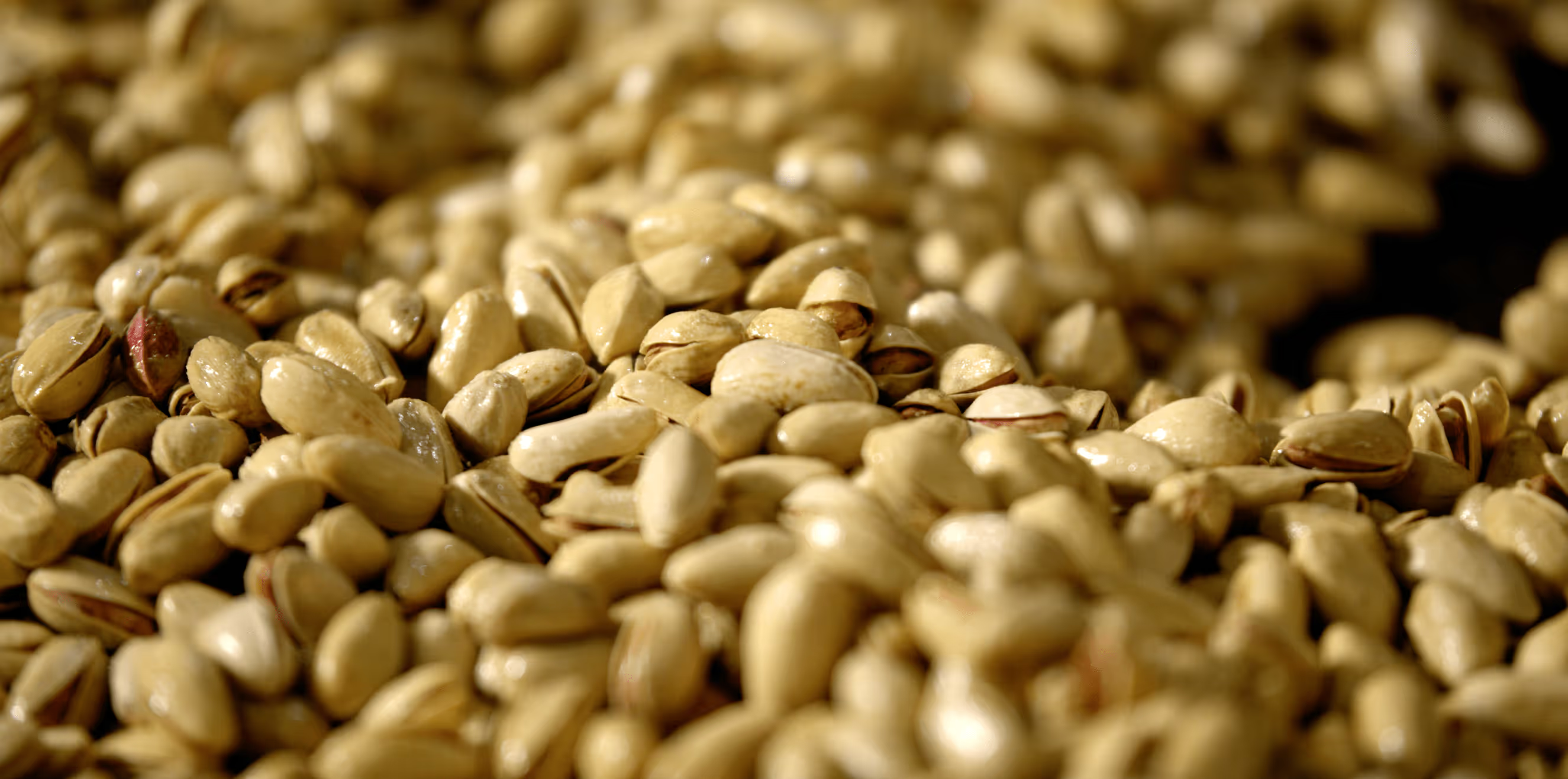
  • Pistachios – 1.7mg
  • Salmon – 0.9mg

Above is just an example of how proper nutrition can support and mitigate against PMS.

Women's Health
6 min read
The prevalence of PMS
PMS symptoms may be influenced by oestrogen–progesterone balance and deficiencies in magnesium, iron, zinc, and vitamin B6. Addressing nutrition, digestion, and hormone metabolism can play a meaningful role in reducing symptom severity and improving monthly wellbeing.
December 10, 2022

A defining moment in human health

We are standing at the edge of a defining moment in human history — one that will reshape how health is understood, managed, and lived. Most practitioners won’t see it coming until it’s already here. The pace of change is no longer linear; it’s accelerating at a parabolic rate.

Over the next ten years, healthcare will undergo a larger transformation than it has in the past two hundred. What once took generations to evolve will soon happen within a single career span.

Why the next leap will eclipse the last 200 years

In the 1850s, global life expectancy hovered around 35 to 40 years. In industrial cities such as Manchester, it was recorded as low as 26. Up to 40% of children died before the age of five. Since then, humanity has doubled its average lifespan — one of the greatest achievements in modern history.

But that magnitude of progress will soon appear slow compared to what lies ahead. To understand why, we must look at how medicine has actually evolved — not as a straight line, but as a series of paradigm shifts.

Medicine has never moved in a straight line

Medicine does not evolve gradually. It moves through distinct eras, each defined by its dominant questions, tools, and limitations. Every era solves the problems of its time — and creates the blind spots of the next.

Medicine 1.0: survival through intervention

The age of infection and emergency care (1800s–1950s)

The first modern era of medicine was built around one core mission: survival. Its philosophy was direct and uncompromising — find the problem, cut it out, kill the pathogen. The focus was acute illness, trauma, and infectious disease. Surgery, antibiotics, vaccines, early imaging, and public health measures transformed mortality rates almost overnight.

Breakthroughs such as germ theory, penicillin, antisepsis, and sanitation saved millions of lives. Yet this era had little understanding of long-term health. There was no framework for chronic disease, prevention, or personalisation. Medicine 1.0 was exceptional in emergencies, but largely blind to the slow decline of health over time.

Medicine 2.0: managing disease, not health

The rise of chronic disease frameworks (1950s–2010s)

As life expectancy increased, the medical challenge shifted. Infectious disease gave way to chronic illness. Medicine 2.0 emerged with a new goal: management. Cardiovascular disease, diabetes, cancer, and mental health disorders became the dominant focus.

Pharmaceuticals, specialist referrals, evidence-based medicine, and large clinical trials defined this era. Disease was framed as isolated dysfunction within individual organ systems. While imaging, surgical techniques, and electronic health records advanced rapidly, care became fragmented. Poly-pharmacy increased, symptoms were suppressed rather than resolved, and patients often cycled endlessly through the system.

Medicine 2.0 kept people alive — but rarely helped them thrive.

Medicine 3.0: personalisation, prevention, and patterns

From symptoms to systems (2010s–2025)

The limitations of chronic disease management gave rise to a new way of thinking. Medicine 3.0 reframed health as a dynamic, interconnected system shaped by genetics, environment, lifestyle, and time. The focus shifted toward root causes, prevention, and optimisation.

Functional blood work, genomics, microbiome testing, wearables, and systems biology expanded what was possible. Practitioners began looking for patterns rather than isolated markers. Precision nutrition and functional reference ranges replaced one-size-fits-all recommendations.

Yet this era introduced new challenges. Data became abundant but scattered. Interpretation demanded high cognitive load. Standards varied widely, access remained inconsistent, and outcomes depended heavily on practitioner experience. While powerful, Medicine 3.0 was difficult to scale.

Many believe this is the peak of modern healthcare.

Why medicine 3.0 is not the end point

Despite its advances, Medicine 3.0 still relies on humans to manually integrate overwhelming amounts of data, make predictions, and adjust protocols over time. It improved insight — but not intelligence. It offered tools — but not true systems.

The next era changes that entirely.

Medicine 4.0: intelligence, automation, and decentralised health

Predictive, adaptive, and continuously evolving care (2025–2040+)

Medicine 4.0 represents a fundamental shift in how health is defined and managed. Health becomes a continuously evolving dataset, updated in real time across all stages of life. The focus moves from reaction to prediction, from static plans to adaptive systems, from intervention to self-correction.

Artificial intelligence, machine learning, digital twins, predictive analytics platforms, continuous multi-biomarker wearables, synthetic biology, and autonomous medical systems will allow health trajectories to be forecast before disease manifests. Diagnostics will become ambient. Treatment will adapt dynamically. Biology itself becomes increasingly programmable.

But this transformation comes with real challenges — data privacy, equity, over-reliance on technology, loss of human connection, and the risk of eroding individual agency. Intelligence must be guided, not blindly trusted.

Building the infrastructure for medicine 4.0

This is where MyHealthPrac enters — not as a response to Medicine 4.0, but as an early foundation for it.

MyHealthPrac is a decentralised health management system designed to translate complexity into clarity. Built on over a decade of research, line-by-line journal reviews, and clinically informed logic, it transforms vast amounts of health data into actionable, root-cause solutions. Hard-coded algorithms, pattern recognition, and predictive frameworks allow practitioners to move beyond interpretation and into intelligence.

This is not theory. It is not a distant vision.

Not the future of health — the next standard

Medicine 4.0 is not coming someday. It is arriving now. And the systems built today will determine whether this new era empowers practitioners and individuals — or overwhelms them.

MyHealthPrac is being built to lead that transition.

Philosophy
6 min read
The 4 ages of medicine and the one we haven’t met yet
Medicine is entering a new era. From infection control to intelligent, predictive systems, this article traces the evolution of healthcare — and explains why Medicine 4.0 will transform how the world manages health.
August 5, 2025

You are only as ‘strong’ as your weakest link

Our body is a complex yet beautiful organism that we barely scrape the surface when it comes to an understanding of how we work.

What we do know is that every system within our body is interdependent on one another. It works and flows synergistically and has a bidirectional relationship.

We often prioritise aesthetics whilst neglecting other systems, only paying attention to them when it is too late and hardship, dysfunction, or disease has manifested as a consequence.

The following systems are what need respect, nurture, and care:

  • Muscular System
  • Structural
  • Endocrinological
  • Neurological
  • Gastro-Intestinal
  • Microbial
  • Cardiovascular System
  • Pulmonary System
  • Immunological
  • Biotransformation
  • Lymphatic System
  • Psychological
  • Emotional
  • Environmental
  • Spiritual
Philosophy
6 min read
Human symbiosis of health
Focusing on aesthetics while ignoring foundational systems leads to dysfunction over time. True health comes from supporting the body as a whole—physically, mentally, and environmentally.
December 10, 2022
Clarity, confidence, and real results start with one conversation. Let’s map your next chapter — together.